Yesterday we joined a seminar on trivselsøkonomi (wellbeing economy), organised by Alliancen for Trivselsøkonomi – WEAll DK, as part of Reclaim the Economy Week.
As part of the programme, we had the opportunity to host a session on Futures of Motherhood. The intention of the session was to use motherhood as a lens to explore how societies organise care, work, and responsibility within a wellbeing economy, and to show how strategic foresight can help groups think about long-term change in concrete, collaborative ways.
Why motherhood?
Motherhood holds a particular place in our collective imagination and language. Metaphors such as Mother Earth, the mothership, and maternal instinct say something about what societies long for, fear, and what they expect it to look like. what expectations we place on mothers (and caregivers more broadly).
From today’s signals to future snapshots
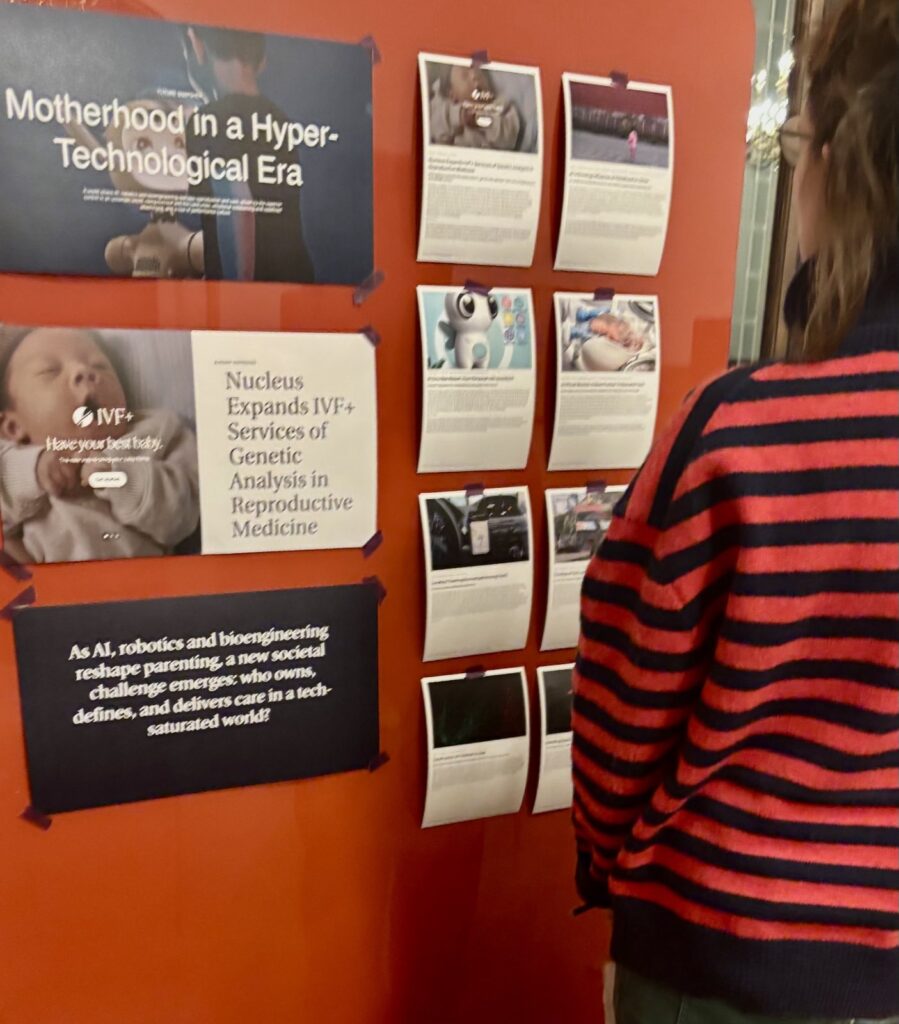
We shared recent research on Futures of Motherhood and connected it to strong signals shaping society today: climate instability, technological acceleration, care shortages, and changing family structures. From there, we explored future snapshots and asked participants to explore possible worlds and reflect: what if we’re already there?
Together we explored motherhood in three possible future contexts:
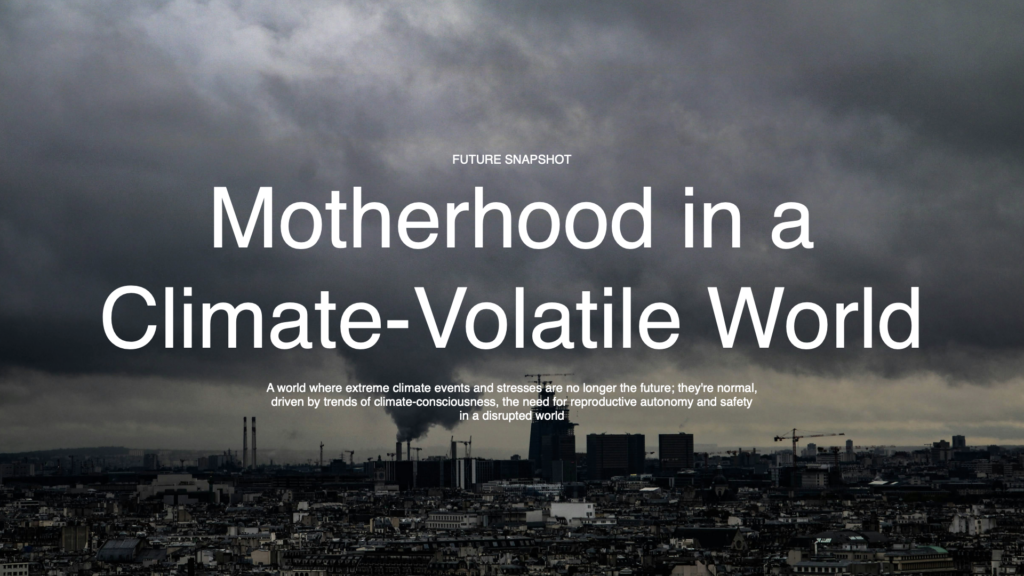
- Motherhood in a climate-volatile world – What does it mean to be a mother in a 3–4°C world?
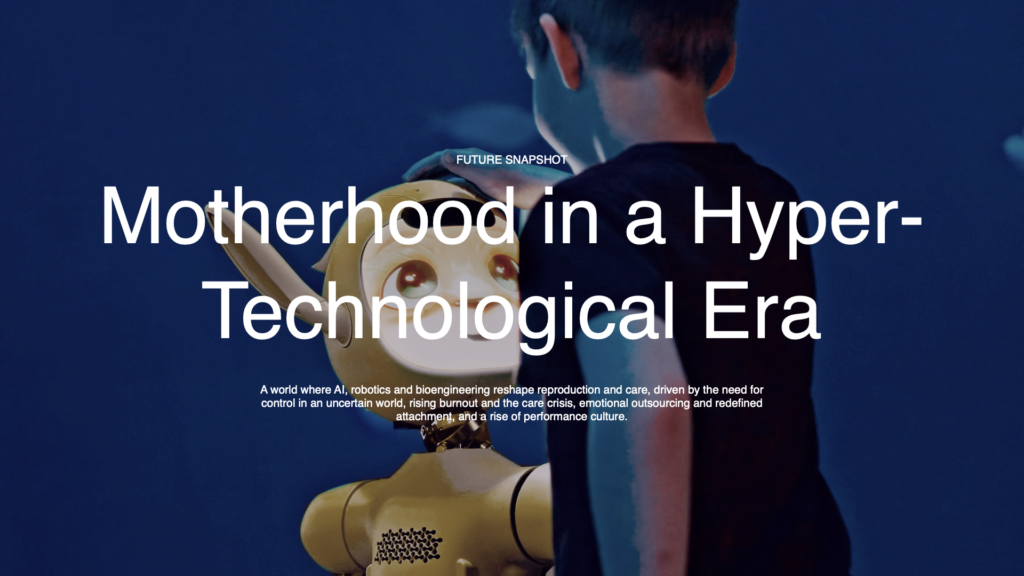
- Motherhood in a hyper-technological era – How might AI, robotics and bioengineering change reproduction and care, and what happens when motherhood becomes increasingly hybrid (biological, technological, outsourced)?
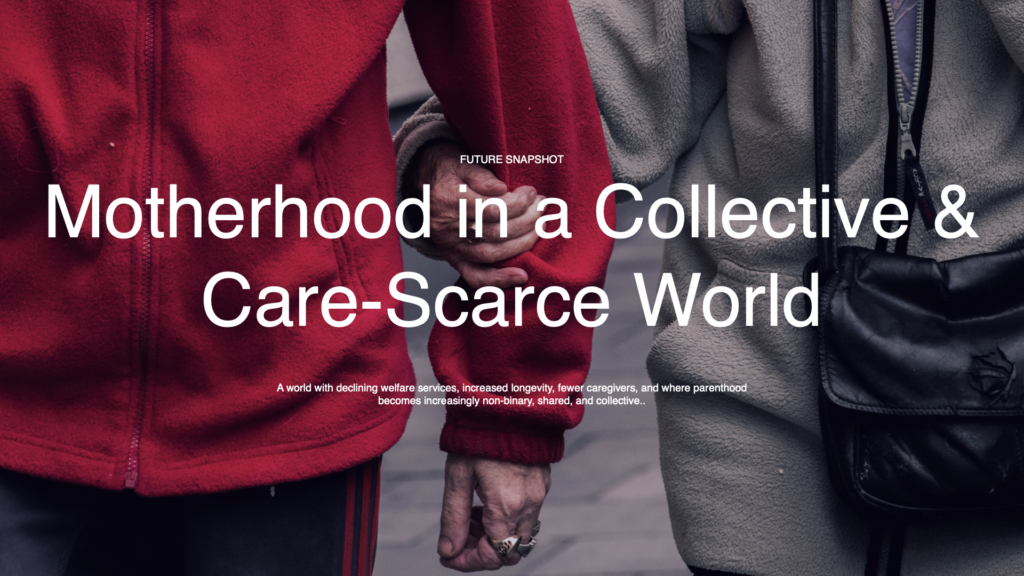
- Motherhood in a collective and care-scarce world – What happens when care systems are under pressure and societies shift toward more collective models of care and “social motherhood”?
It was a great session with engaged participants, thoughtful dialogue, and lots of nuanced perspectives. We left with new connections, sharp questions, and a sense that futures-thinking can be a useful space for exploring complex topics, especially those that are both deeply personal and impactful for the future societies we design.