
” Should Citizen Science be a civic duty in the future?”
That was just one of the questions that popped up during the EU-funded project we explored together with University of Barcelona (SP), Münster University of Applied Sciences (DE) and the University of Twente (NL).
Citizen science can be a great way to involve people in the challenges they face and equip communities to influence their futures. However, owning and shaping your future is often an issue of equity. For certain people in certain neighbourhoods in cities, particularly less privileged communities, it is already difficult to make ends meet, let alone think about the future.
While resources are provided to researchers and practitioners on how to tap into the potential of Citizen Science, the knowledge and skills needed by citizens, citizen science practitioners, and many other social actors to achieve such participation are frequently overlooked. As part of an EU-funded project ‘Citizen Science Now’, the Needs assessment & future foresight report of the Erasmus+ project “Digital Citizen Science: Network, transfOrm, groW” aims to address this gap by providing insights concerning citizens’ behaviours, motivations, and change signals on Citizen Science at the European level. The report captures and delivers on the needs-assessment research and findings generated via futures design principles.
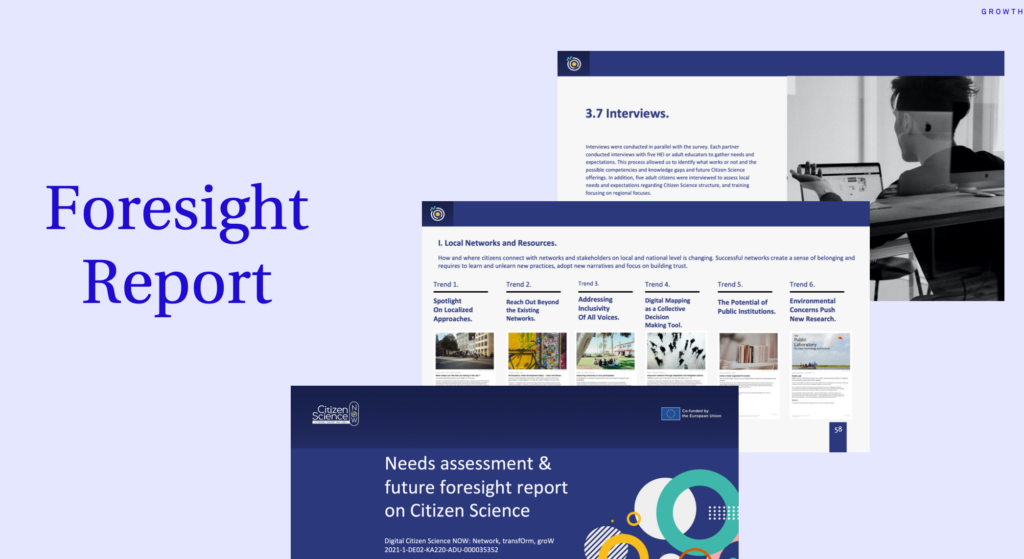
Within the Citizen Science NOW project, we used horizon scanning and futures research focused on exploring and understanding contemporary and future developments of Citizen Science, using the following research questions as a guideline:
+ What drivers will change the future landscape of Citizen Science?
+ What are current and emerging behaviours and technologies in Citizen Science projects and Citizen Science digital training that can inform future direction and create a better understanding of needs?
Following the previously discussed desk research, the partners came together for three sense-making workshops, an inspiring session to find patterns and articulate findings from the study. This workshop consisted of three steps.
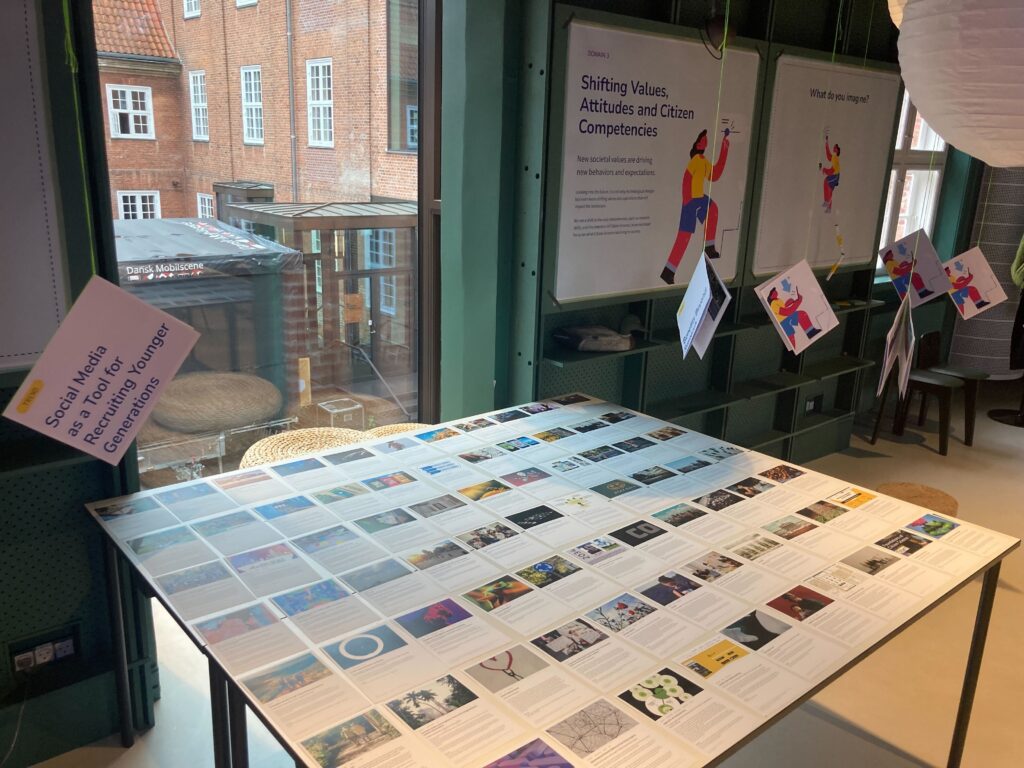
To start with, each consortium member illustrates one of the scan cards created based on their research, which they map out on a board. Next, another member finds a scan card that correlates to the first one. As each member posts their findings, clusters are naturally formed, and patterns emerge. Finally, these clusters lead us to synthesise the collected information, creating ‘Insights’.
Once these insights are created, the consortium comes together to name them based on what they see as the underlying connection among them.
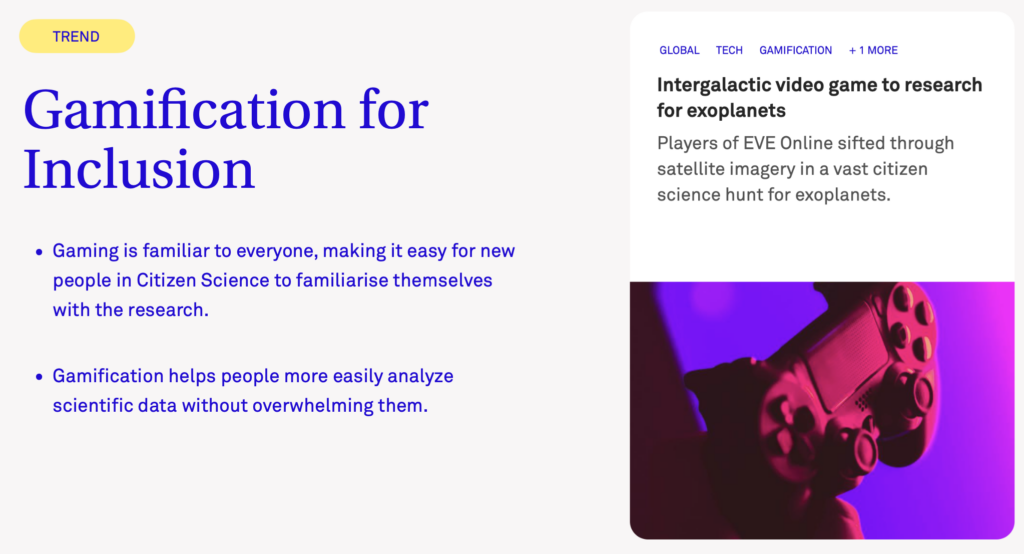
Through this process, 17 insights have been identified through our research, followed by critical signals that support them, distributed in three domains of interest: 1. Local Network and Resources, 2. Shifting Values, Attitudes and 3. Citizen Competencies and Online & Offline Capacity Building Platforms.
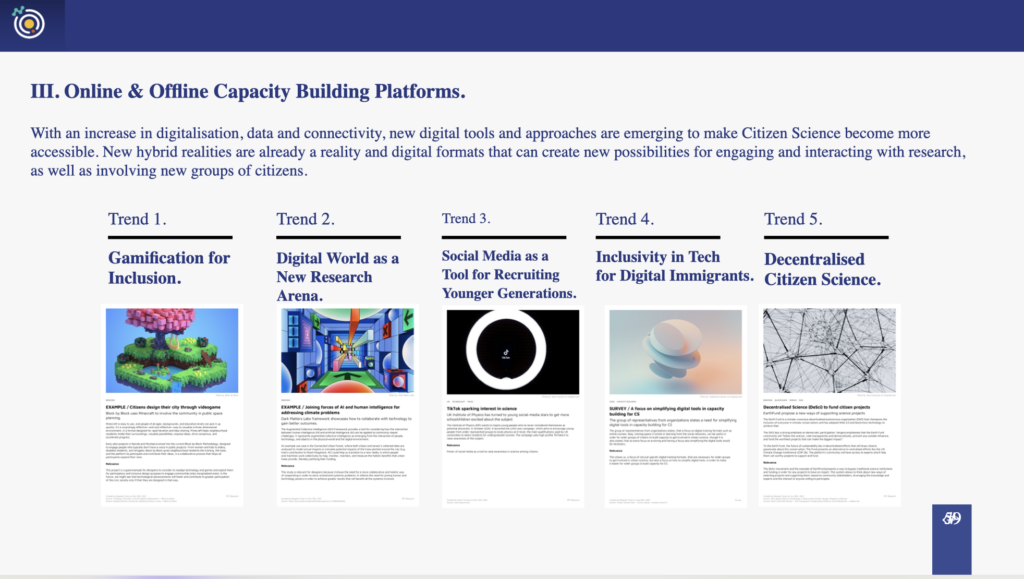
The insights that we have extracted from the signals demonstrate the status quo of the Citizen Science sector as well as examples that lead the way of the industry. The findings would help the university partners to take these findings into the development of a digital training program that equips citizens with the capacity for Citizen Science projects.
The details about the insights can be found in the Future foresight report on Citizen Science can be found here.
Credits: Delivered as part of Bespoke. Role: Strategic Foresight Lead


